Articles Published About San Juan County

This blog initially was used to archive articles written by Janet Wilcox and published by Neil and Becky Joslin in the Blue Mountain Panorama. In 2019 it was revived and includes articles printed in the San Juan Record, as well as other venues. By republishing digitally, more photographs can be added, and comments and corrections can be quickly upgraded. A blog is a more permanent historical location and is searchable. Thank you for reading my articles in the newspaper, as well as on the Internet. If you have ideas for stories, please contact me at 42janetkw@gmail.com

Saturday, July 27, 2024

Blanding Motel & Stone Lizard Site Turns 70 this Year: Part I, The Blickenstaff Era

The motel used radiant heat. After about 15 years, Gene decided it would be more economical to have a coal-fed boiler. John and Kurt were put in charge of cleaning out the coal dust and clinkers from the boiler. The two boys spent one entire summer in the crawlspace under the motel, insulating hot water pipes by wrapping and taping newspaper around them. John recalled, “Whenever we came to the Sunday comic section, we would stop what we were doing and read the comics.”
Besides his job and helping to raise a growing family, Gene volunteered at the San Juan Nursing home. He was honored in 1983 for his volunteer service where he spent countless hours visiting the residents and sharing books with a reading circle (a program which he conceived and organized). He was Blanding’s first PR man and loved talking about San Juan County. He even painted a white square on the back side of their living quarters and used it as a screen to show slides he had taken of San Juan County to motel guests during summer evenings.
Their son Todd, recalled: “Motel Blanding is where I grew up from 1963 (birth) to 1976, when we moved three blocks to our new home on 100 East and 100 North in Blanding. The motel was attached to our home, which had two-stories and an unfinished basement. There were 19 rooms (1-20 with no #13). It was heated by a large coal furnace. There were trees, flowers and lawn to maintain, and we had a huge garden in the back. To save money, dad built a flat roof over all the rooms, so the snow had to be shoveled off the roof in the winter. The motel required a lot of work. We helped clean rooms, plant, water and weed the garden, prune the trees, shovel coal, clean the furnace, shovel snow and much more!”
“I also remember when Blanding first paved 100 West, adjacent to Motel Blanding. I rode my bike up and down the newly paved street before the asphalt was set. I came into the house covered with asphalt and oil that flipped up onto me from my bike tires. Mom took me out on the back porch, stripped off my clothes, stuck me in the large utility sink, and used turpentine to remove the street from my skin.”
“On New Years Eve, we could invite one friend over and mom and dad would let us have a motel room all to ourselves,” Todd remembered. “We would stay up late, play games and watch TV. Every October, deer hunters from California would come and rent rooms. It was one of the only times during the year when we would actually fill all of the rooms. Some of the same hunters came each year. They would bring us oranges, pomegranates, nuts and other goodies from California, and we became friends with them. My dad was a good deer hunter and we loved going with him during the hunt. He would always bring one home and hang it up in the garage where it was cool. We had a refrigerator in the garage and mom was always sending me out there to get something out of the fridge. When I was young, I was scared to go out there when there was a dead deer hanging up. I would put a football helmet on and not look directly at the deer. I would quickly grab whatever mom needed from the fridge and dart back into our house.”
“The garden was amazing! All the fruit and vegetables you could imagine. My favorites were the corn and all the various fruit trees we had”, Todd added. “My mom made delicious pies, cobblers, jams and jellies. The garden was also a fun place to play hide-and-seek. Dad planted several fruit trees behind the motel and kept a large vegetable garden there as well. We harvested cherries, apricots, apples, and peaches, which Mom bottled for use in the winter. Dad created his own hybrid corn seed and prided himself on having corn ready to eat by July 24th. Our summer meals always involved produce from the garden, including corn, tomatoes, peppers, cucumbers, radishes, asparagus, cantaloupe, and other goodies. I spent hours hoeing weeds and keeping the furrows cleaned out so water would flow to the end of each row.”
Many Blanding residents have fond memories of the Blanding Motel: Amy Watkins recalled that Dr. Broughton ran his traveling optometry clinic out of the last unit, and she got first pair of glasses from him.
Tara Dawn Olsen along with Cindy Bradford and Ulene Black cleaned rooms for Francelle when they were 14. “She was the best boss ever!!” Rickell Walters remembers working there also. “It was my very first actual job! I vividly remember making beds and cleaning rooms!”
Several families lived in the Blanding Motel while waiting for their own homes to be build. Eva and Stan Byrd were building a home on 2nd West and moved their family into the motel and managed it. Jeff Byrd recalled, “We were so lucky to have a pop machine in our living room. I have fond memories of riding my skateboard down that long sidewalk to the mini mart. I would do that over and over until I was badly sunburned. I think we were there almost a year.” Bonnie and Truitt Purcell had a similar experience, living there from ’78-80 when their home was being built and the Browns were running it. Robin Dawn McDaniel also recalled moving to Blanding in 1978 and living in the main house when the Browns were running it. Carol Barton: “I have lots of memories of that motel. We stayed there when my Dad (Lynn Lee) was interviewing for the principal position-in Blanding. We went to see Oklahoma in the movie theatre that night. Then for the next several years I spent lots of time there as Mary and I were the same age. Mary’s mom had such a fun since of humor. It was always fun to go to her house.” Julie Hawkins: Mitchell Hawkins lived there with his two daughters, Kristi, and Andrea, while he managed it about 1987 Toni Lacy: Mike remembers being taught the gospel of Jesus Christ from a very good missionary (Gene Blickenstaff) in this motel.
“The motel was never a profitable enterprise while my parents owned it”, Kurt recalled. My father thought that Blanding would have a thriving tourist population, which it does today, but rarely did in the 1950s to the 1970s. There were more tourists in town during the summer months than in winter, but they struggled to break even most years. A possible exception to this was during the 60s when the US Department of Defense was testing and training military personnel in the use of long-range guided missiles. They were launched from a facility on White Mesa and aimed at a target area near White Sands, New Mexico. There were many service men involved in these exercises that were stationed in Blanding and housed in local motels for months at a time. This certainly helped the local economy and provided various social opportunities for the local populace.”

Friday, June 28, 2024

San Juan High: A Tradition of History Fair Winners

By Janet Wilcox "Those who don't understand and appreciate history are bound to repeat it." Santana
Students from San Juan High School have consistently done well at the State History Fair for decades, with many qualifying for Nationals in Washington DC. The first ever to do so was Tonya Morris from White Mesa who won Utah's Grand prize expense-paid trip to Washington D.C. June 12-16, 1988.
It was an eye-opening experience for this Ute student and her advisor to travel to such a gigantic city and compete with students representing the whole USA. Tonya’s paper on the Posey War placed 1st in Utah and her teachers, principal, and friends were thrilled for her. Participation in such things as history and science fairs require "Authentic Assessment" where research and documentation are useful to others. "We had the most awesome time on that trip and only got lost 2 or 3 times! Since 1988 dozens of other Blanding and Monticello students (taught by Judy Barton and others) have competed on a national level." Most recently Saylor Dandy, daughter of Jim and Rena Dandy, qualified for the National History Fair and competed in Washington DC this summer. Her presentation was a display showing experiences of Native American children as they sought to get an education. She interviewed her grandparents: Edward Whitethorne and Sally Johnson and read notebooks that her grandparents, Jim and Betty Dandy kept, related to boarding schools. A documentary and recorded stories of other friends and relatives who attended boarding schools in the Four Corners area were also included in her research. To qualify for National's, students are interviewed by 2-3 judges at each level of competition (local, regional, and state). They must be knowlegeable and exact in the information they share with judges and utilize a wide variety of sources. Saylor’s teacher/advisor at SJHS is Jesse Grover and he attended the National History fair as well as Saylor's parents, Jim and Rena.
SJHS WINNERS FROM THE PAST San Juan High's winners in 1987 for historical papers were: 1st Shelley Singer, 2nd Tonya Morris, 3rd Julie Martineau with Superior ratings going to Steve Black, Kaelin Perkins, LeAnn Lovell, LeeAnn Bowring, Daryl Guymon, Kacee Shumway, Gary Lyman, Katrina Shumway, Lorin Kartchner, Deniane Gutke, Annette Carroll, Kim Hurst, Tyler Palmer, Missy Knight, Jenifer Kurtz, Janell Guymon, and Thelma Tate.
Region Winners 1988 --Historical papers: 1st Shelley Singer, 2nd Tonya Morris, 3rd Julie Martineau; Superior ratings: Steve Black, Kaelin Perkins, LeAnn Lovell LeeAnn Bowring, Daryl Guymon, Kacee Shumway, Gary Lyman, Katrina Shumway Smith, Lorin Kartchner & Deniane Gutke, Annette Carroll, Kim Hurst, Tyler Palmer, Missy Knight, Jenifer Kurtz, Janell Guymon, and Thelma Tate.
STUDENTS WIN TOP PRIZE AT UTAH HISTORY FAIR 1992
2004 Navajo students Lynnette Chee, Reed Sampson and Cyndee Stash of San Juan High were the grand prize winners in the Utah History Fair. They utilized their cultural background to develop a project on Navajo rug-weaving, and won $500. They also won 1st place and $75 in the Brigham Young University's Charles Redd Center contest for the best historical project dealing with Western history. Reed was inspired to use a book format after a book fell down from a shelf and hit him in the head! They created a display with large pages that turned Each page told part of the history of Navajo weaving. Their project also won $75 for best Western Research Exhibit and they won an expense paid trip to Washington D.C. Other local winners in 2004 were Revarae Bitsinnie and Carissa Nelson.
1995:One of the biggest groups from San Juan to qualify for the National History Fair included: L-R: Christina Guymon, Jeanine Christensen, Mindy Redd, Zeb Crofts, Valena Lake and Landry Redd. Platt Nielson and Kyle Laws also qualified. They won numerous awards at each level of competition. Several parents traveled with them to Washington DC along with their advisor.
1997
: Kristina Long placed 1st in individual performance at Region with her story of the Long Walk entitled "Peaches"; 2nd place went to Tyler Jack and his performance related to the CCC Camp in Blanding. Kami Christiansen wrote her research paper on the role that her grandfather County Commissioner, Calvin Black played in the Sagebrush Rebellion. "From Sagebrush Rebellion to Environmental Hellion" was the title. She won 1st place for local research from the Charles Redd Center and a $100 cash prize. She also took 2nd in historical papers in the state. She and her mother went to Washington D.C. in June 1997 to compete. She used over 20 primary sources in her research.
2009: Winners in the Charles Redd competition were Gina Guymon, San Juan. Teachers given Merit Awards included Judy Busk, Richfield High; Janet Wilcox, San Juan High; and James Walker, Grand Middle.

Thursday, June 27, 2024

Bonnie Meyers: Quilter Extraordinare for 80 Years

Bonnie’s mother, Beth Guymon was a great example of frugality and made all of her children's clothes as they were growing up. Bonnie never had a store bought dress until she was in junior high school When she married Steve Meyer at 18, she started making all of her daughters’ clothing. This included Easter dresses, Christmas and 4th of July outfits.

Bonnie remembers her mother, grandmother, and Gladys Lyman (Albert R. Lyman’s wife) tying quilts in their home on 3rd west. In that era, quilters would cut each piece of yarn individually and tie each knot separately. She recalls sitting under the quilts and listening to the lady’s gossip!

In her younger years, Helen Palmer needed help with a quilt and called Bonnie, asking for help. Helen was an excellent quilter and Bonnie felt that when Helen asked for her help, “I was finally good enough to quilt for others.” Helen’s approval made Bonnie feel like she had “really made it!”

“Bonnie has been a friend since I moved to Blanding years ago”, Nancy Kimmerle recalled. “She has a plethora of children, grandchildren, and great-grandchildren. Bonnie remembers each one with pictures on her refrigeration, kitchen, and flowing into other areas of her house. She makes each one a Christmas gift! “Bonnie is a professional pillowcase maker with all sorts of fun fabrics; many years adding their name with her embroidery machine. She also hand-quilts intricate tricot quilts for each marriage.” Nancy added, “Bonnie is fun to visit with and enjoys card and board games and LOVES gardening. Her yard is full of flowers of all varieties. In fact, if you go for a visit and she doesn't answer the door right away, she's probably in her garden. If you have to wait, she only asks, (via a sign) that you pull a few weeds!

Sunday, June 16, 2024

Making the Desert Bloom: Water Reservoirs in SJC

By LaVerne Tate and Janet Wilcox

Many Blanding people will remember the water crisis Blanding faced spring of 1990. That winter had no significant winter snowstorms and very little runoff came into the Starvation nor Dry Wash Reservoirs. In May, the City of Blanding hired John Black to pump water 24 hrs a day to the Water Treatment Plant. Ironically, Blanding was out of water, but owned water in Recapture Reservoir. There were big pumps which moved the water up to two other lift ponds and to Starvation Reservoir, where it could go through the city pipelines to the water treatment plant.Philip Palmer was the engineer on this project.

To solve the problem, Blanding rented 12,000 ft. of sectional pipe, each section 8"x40'long from Bowlens Inc. (Rain for Rent,Logan, Utah).
They also rented four diesel high volume, high pressure pumps from them. These pumps were in continuous use and one was a standby, in case of problems. It took 12,000 ft. of pipeline for that distance!Jerry Holliday built the lift ponds and the roadway for the pipeline. Some of the road was an old sawmill gravel road that went up to the west side of Johnson Creek (called the LC Ranch).

Bowlens worked with city employees Mike Dayzie, David Homedew and John Black to install the pipeline from northwest side of Recapture up the old sawmill road ½ mile and then up the old LC Ranch dugway then northwest to Starvation Reservoir.

The Holliday crew built two storage ponds, one at the base of the hill and one on top of the hill. This was to relieve the pressure for the pumps doing the transfer of the water. It was a 500 foot, vertical lift from Recapture to Starvation. A fourth pump, owned by the city of Blanding, pumped water from the lowered level of 4th Reservoir to the pipeline going to the water treatment plant. There were 250 gallons per minute pumped into the treatment plant until the 4th Reservoir was drained.(Glen and Kline Black came up with their fishing nets and took some very prize fish out of 4th at this time.)

John Black's job was to check the pumps three times a day and make sure everything continued to run on schedule. He did this for six months. Each lift pond had to maintain the same level of water in order to keep the pumps functioning. He started at 6:00 A.M. to check the pumps and water lines and rechecked them again at 12:00 noon and 6:00 P.M. On weekends he would change the oil on the pumps. Each pump had its own fuel tank. Mike Christensen delivered fuel to each pump.A million gallons of water were pumped every 24 hours to the water treatment plant by this process.

John would go to Starvation Reservoir and look at the water coming out of the pipeline and could tell if all the pumps were functioning properly.To simplify the delivery problem, Blanding rented 12,000 feet of sectional pipe from Bowlens Inc. Rain for Rent, Logan, Utah.; each section was 8'X 40' long. They also rented four diesel high volume, high pressure pumps from them. These pumps were in continuous use and one was a standby, in case of problems. The water was pumped 500 feet from Recapture Reservoir to Starvation Reservoir. It took 12,000 feet of pipeline to cover that distance!

Jerry Holliday built the lift ponds and the roadway for the pipeline. Some of the road was the old sawmill gravel road that went up the west side of Johnson Creek (called the LC Ranch). Bowlens worked with city employees Mike Dayzie, David Homedew and John Black to install the pipeline from northwest side of Recapture up the old sawmill road ½ mile and then up to the old LC Ranch dugway. From there it turned northwest to Starvation Reservoir.

The Hollidays built two lift storage ponds next, one at the base of the hill and one on top of the hill. This was to relieve the pressure for the pumps doing the transfer of the water. It was a 500 foot, vertical lift from Recapture to Starvation.

A fourth pump, owned by the city of Blanding, pumped water from the lowered level of 4th Reservoir to the pipeline going to the water treatment plant. There were 250 gallons per minute pumped into the treatment plant until the 4th Reservoir was drained. (Glen and Kline Black came up there with their fishing nets and took some prize fish out of 4th at this time!)The 4th Reservoir was built in WestWater Canyon in the
1960's for $110,000, to increase Blanding's water storage.

Previously $100,000 had been spent trying to do patch jobs to stop the seepage that was losing water needed for the farms below Blanding. In 1964,the Blanding Water Treatment Plant was built in Blanding and in 1970a million-gallon storage tank was built at the water treatment site. In 1980 the Starvation Reservoir was built by the City of Blanding. The old original standby reservoir, called the 3rd was first drained and covered with the Bentonite Clay. Trees, reeds and brush were removed and it was thoroughly redone by Hurst Builders.

The 4th Reservoir had been patched at least three times trying to stop the loss of water that seeped constantly from the dam. It was finally decided that the 4th had to be completely lined and fixed to stop the water loss. This project began in the fall of 1990 with $350,000 allotted to complete it.Norman Nielson was a strong proponent of the project and John Black was the Construction Supervisor. Equipment owners were also involved. The 4th Reservoir was completely drained and lined with Bentonite Clay. A total of 60,000 tons of clay was hauled to the site from the Recapture area. It was then completely covered again with soil so the clay would not erode.

The permit for the good Bentonite clay from above Recapture was obtained from the BLM.

The City of Blanding got a CIB grant to put in pumps, and a 10" metal pipeline so now if they had a water emergency, they can pump water directly to the Starvation Reservoir from Recapture Reservoir.The 4th Reservoir and Starvation Reservoirs could now hold the same amount of water, 550 Acre feet of water.

This project was completed Thanksgiving weekend. It was finished with no delays or problems. Since then, the reservoir has never been dry. The equipment and fuel tanks were moved out by Nov. 30. On Dec. 10 it snowed 2' at the project—-a big boost to the final completion of the purpose. All of Blanding today reaps the benefits of this great effort which assures that the city has water.So when you're taking a long shower or filling your glass with cold water, remember what the price and effort was for good, safe water! >

Monday, May 6, 2024

Annie Charles: Quilter Extraodinair

The Many Colors and Talents of Annie Charles  

        Annie Charles is exceptional in this regard, as she uses her talent to create fabric art for family, friends and military veterans. She is an active member of the Grayson Country Quilters even though she has to drive from Montezuma Creek.initial; background-size: initial; line-height: normal; margin-bottom: 0in; text-align: left;">She is an excellent seamstress and shares her talents and friendship. I love Annie! "Gayle Shumway


   Annie's talents as a seamstress and quilter has impressed me over the years.  She attempts and completes items that I would NEVER do.  Besides her beautiful quilts, Annie has made umbrellas, different types of purses, bags, backpacks and just recently stuffed animals.  Her work is of such a quality that items from her are excellent!  What more can I say?


   Over the years Annie has become a dear friend.  She is honest. She keeps her words.  She wants a better life for her children and grandchildren than the life she had.  Annie serves people in a quiet way.  She is very involved with the Aneth Senior Center and the VFW, because of her husband, Nelson, service with the National Guard.  This past year, Grayson Country Quilters has donated 20 quilts to the Aneth Senior Citizens at Annie's request.  She has graciously taken pictures of the quilts given to each of the recipients.  Recently a group of us have been sewing together and Annie has shared more of her life experiences with us.  I deeply admire and respect her and am pleased to call her a friend."  Sidney Christensen
Ribbon Skirt

      "I have known Annie for many years now. She’s been a devoted, mother and clever homemaker. She’s an exceptional, seamstress and quilter. She usually adapts or creates her own patterns. Her sewing is meticulous. It’s fun to spend time with Annie and learn about, her life. Her first marriage was an arranged marriage and her husband now is very supportive of her community involvement. She donates many of her quilts to the veterans of World War II and of course to family members."  Nancy Kimmerle

Annie even makes complicated umbrellas!


Thursday, April 11, 2024

Terry & Taylor Palmer: Building To Last

Terry Palmer was 10 years old when he and his 9-year-old brother, Taylor were hired by their dad to clean the Mining Supply Store in Blanding. This early work ethnic and training eventually motivated both boys to begin their own building companies. Terry’s company, Palmer Builders, began in 1976 and Taylor began his business in Blanding in 1973 when he moved back from Idaho. His specialty was cabinets. During the Uranium boom in San Juan County (late 40’s -50’s) the Shumways and other miners needed mining supplies and Van Palmer ran the Mining Supply Store in Blanding. Terry recalled, “Taylor and I moved so many things in and out of that building. We used a conveyor belt and marked boxes with different colors of tape to keep orders straight. We’d load and unload boxes of dynamite boxes which gave us headaches.” (See Mining issues: Blue Mt. Shadows 25-27).
Terry and Taylor and their siblings also painted propane tanks, hauled lots of rocks and cleaned the Patio every day it was open. “At the Patio we worked as a family and I gained confidence; many of my friends worked there as well,“ Terry recalled. “I liked working with mom and dad. Even though Dad was thorough, he had good rapport with all of us. He was a good employer.” Earning his accounting degree from BYU in the early 70’s, Terry’s business training as well as his construction skills kept him employed all his life. His first project was building another “Patio” in Springville when he was single. It was there he met his wife Camie in the early 80’s. He and his family then moved back to Blanding and he started Palmer Builders. The company’s first project was buying the land where the old CCC camp was and building 15 homes there.
First time owners were able to secure low interest loans through Farmers Home in San Juan County and as a result Palmer Builders had plenty of work. Most of the starter homes were 1100 sq. foot/ 3 bedroom. “Farmers Loan wouldn’t finance larger homes.” They also built Sandy and Boyd Laws’ home and homes for Doris and Dennis Guymon south of town. Tony Turk’s home was the last one built. Because cement is the backbone of most homes, Terry had set up his own batch plant, as there were no reliable cement businesses in the county at that time. They first mixed cement by laundromat, then moved the process up to the end of reservoir road. Nicky and Jeff Black worked for them during those years. “We poured lots of cement and had to finish it ourselves. Most of the homes had basements, so It was a learning experience!” Palmers even poured cement for Hurst Builders as they were also doing commercial projects at the same time in Blanding,” Terry explained.” Sometimes we’d pour 5-6 loads for Scott Hurst. He was really a good man.” Unfortunately, Farm Home Loans dried up and this forced changes in their building business. Taylor served a mission to Scotland and returned to Blanding in 1970, then started school at BYU where he met Jenice. That summer he transferred to a trade tech school in Provo earned his contractor’s license. They were married June ‘71 then moved back to Blanding where he started working with Jim Slavens as well as his father, making and installing cabinets. His specialty was kitchen cabinets, vanities, and staircases.
In 1980 Terry began working for other construction business. For over 20 years, he worked doing multi-million-dollar commercial projects in southern Utah. His accounting degree from BYU played an important part in his success completing high-quality projects. Cedar City was their next destination and the Palmers moved to Cedar City and opened a paint store. Terry eventually was hired as an accountant estimator for Blackburn and Assoc. in the mid-80’s working on commercial buildings, the college, church, and state buildings.
During that same time, Taylor and Jenice moved to Sweet, Idaho near Boise 1979-86 where his carpentry skills were put to work. They eventually moved back to Blanding and built a shop on Reservoir Road (where Shawn and Stephanie Jack live now) and lived there until about 1990. Then he built the large TaylorMade shop in 2004 on North Hwy where he worked with his sons: Quinn, Josh and Jared. In later years grandsons came to work and learned the carpentry skills needed for commercial work.  Those skills continue today.  They have expanded the business to also include headstones;  utilizing all kinds of stone, and a wide variety of choices for personalized tributes.  Terry’s most challenging project was constructing the Fire station in Emery County for the Water Conservancy District in St. George. They had to float the equipment and supplies on pontoons. A previous company lost a whole caterpillar once in the process. Another major challenge was a project for St. George on the west Bluff. They had to dynamite the rock out first, then drillers inserted heat pump coils into the ground. The pumps worked like a refrigerator but in reverse. They also built 1 motel in St. George, doing their work at night because of the heat.
Besides extreme heat, St. George had other building challenges. The soil often had blue clay in it and which had to be removed. (It was much like the kalachi clay which caused problems for the Blanding Stake Center.) A vein of clay swells when damp and will break the foundation. They put 18-foot columns into the ground to make sure it would be stable.
From 2005-06 Palmer Construction built Marriott Motels and the large Best Western Motel in Bryce Canyon -- the biggest one in their chain. They also built a large barn for entertainment at Ruby’s Inn. “We worked there for about a year and they were great to work for,” Terry stated.
“Velocity Construction was the biggest construction company in in southern Utah and I was a partner for in the company,” he explained. Velocity also did the DFCN State Construction projects as well as building projects for Dixie and USU, motels and other office buildings.
Terry worked with Velocity and a large crew of men for 7 years. “We completed about 40 projects.” However, when financing dropped in 2008, construction was dramatically affected. The company subcontracted work out to six superintendents who subcontracted the work and at that time he retired and his family moved back to Utah Valley (Mapleton) in 2010. Though he still works part time as an estimator in Orem for Broderick and Henderson. At age 75 he hasn’t slowed down much and built a home for their daughter and recently renovated an apartment for Karly and Scott Jeppson in Blanding
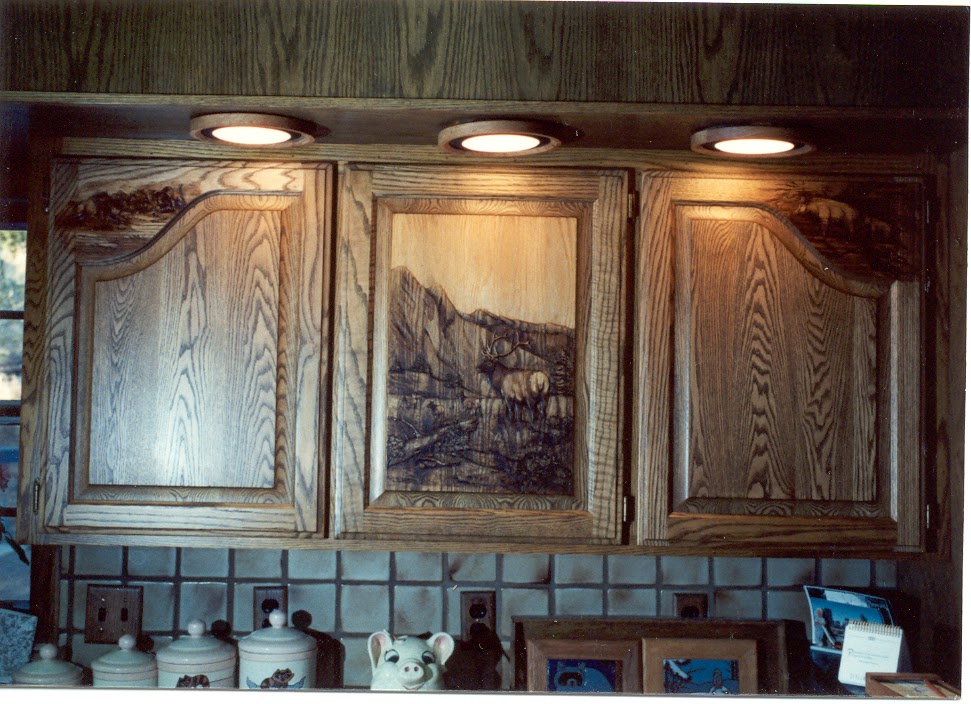
Taylor Palmer’s family worked many years doing commercial work for county schools, hospitals and other large businesses in the county putting in cabinets. They also did the mammoth job of building cabinets and doing finishing work for Allen and Cathy Lund who built a huge lodge and homes in Long Canyon.

The Palmers did the trim work, cabinets, staircases, furniture, cabinets, beds etc. for the Lund's. Janice researched and drew the art used in the homes. The property was originally settled and farmed by William Zimira Palmer and his wife Rebecca Stevens. Their original home is still standing in Long Canyon as a tribute to their hard work and contribution to San Juan County. Taylor and Janice also worked together building their own home which includes her “inspiration loft” where she writes and studies and can see forever in all four directions! It is where she does her scripture study and writing. Their home is very unique and personalized. A great sadness occurred in July 2019 when Taylor died of cancer. Fortunately, all 3 of their sons had the skills to keep Taylormade successful and serving the Four Corners area. They and their families continue to keep quality carpentry and construction alive in Blanding and San Juan County.

Saturday, March 16, 2024

Tony Wojcik, SJH Art Instructor & Artist Inspired Hundreds of San Juan High Students


Tony with Troi Whitethorne one of his former students

   Teaching art and creating art are two different realms of achievement and retired SJHS art teacher, Tony Wojcik not only had those skills, but taught hundreds of students (and even teachers) how to develop those skills as they learned the 3 P’s: pottery, painting, and photography.

    Back in the days before technology and cell phones, taking photos for the school paper, The Rattler, was a very complicated process. The film had to be developed, then imaged onto photo paper that had to go through several liquid processes (water baths).  It was Tony who taught us how to do this.   He was always very patient and explained the “why” and “how” of each step.  

    He also introduced the concept of how the two hemispheres of the brain work and how both sides can be part of the creative process.  The book “Drawing on the Right Side of the Brain” explained this concept and it was very useful to me personally while teaching a diverse student body who had a wide variety of skills but had differences in hemispheric strengths of the brain.


     Tony grew up in Clearing, a suburb of Chicago. He has lots of family there and grew up enjoying ethnic foods. He and his wife Leslie met while both were serving in the US Airforce (65-69) and they were married in 1969.  Tony went to Mesa State College in Grand Junction, then to BYU (1971-74) where his serious study of art began. They soon learned that an art major is a very expensive field (because of all the required art supplies)!  He worked a year in Grove, Okla then they went back to BYU where he earned his Masters degree.  


   Mr. Wojcik’s art classes were a great reprieve from the pressure of English, Math and Social Studies classes.  In the 80’s and 90’s teachers were expected to get all students up to an acceptable standard of achievement as determined by tests. In art, however, there was a wide range of “acceptability” as well as varied art mediums: pottery, oil painting, watercolor, and photography.   Autumn Wilcox recalled, “He was very relatable to students, a good teacher, and joked around with us making everyone feel comfortable and accepted.”


Large lion pot made by Robert Wilcox
in Mr. Wojcik's class.


     He taught hundreds of students at San Juan High over a span of 30 years.  He also taught for the college for 5 summers with the Upward Bound program.  They not only learned the basics of art, but also went to art museums in various places seeing the “real deal.”  Tony continues to make pottery and sells his wares at both the Monticello and Blanding Tree for All. He has his own kiln and potter's wheel and keeps his skills top notch.   


   Several of Tony’s students now make their livelihood by painting and/or making pottery.  Surviving financially as an artist is not an easy accomplishment and the term “starving artist” is common; however, two of his students Gil Scott and Troi Whitethorne are exceptions.  Perhaps there are more.


    Gil Scott, a successful San Juan County artist, recalled, “In Blanding they used to have a summer program where we’d have a summer job and then attend summer school. I always remember Mr. Wojcik saying, ‘You could be painting in an air-conditioned room!’ -- Hinting that I could be doing artwork!  He also had art magazines and art books in his class room for us to look at. He’d catch us flipping through the pages looking at the art and he would mention that the photos ‘don’t capture half of the painting-- until you see them on the wall.’   “In my travels and being able to actually look at masterpieces, I now have a small understanding of what he meant and how artists move the paint, use composition, lights and darks. the mediums make sense.  A photo of a painting doesn’t do justice to the real deal!”


    Troi Whitethorne, another successful San Juan County artist, started taking classes from Tony in 1990 at SJHS, his Jr. year. “We worked in several mediums: clay, paint, and pencil sketching.  Mr. Wojcik taught us basic art composition, dimensions, color wheel and mixing colors, shadows and balance.  In addition, we learned everything about making pottery: mixing, firing pottery, painting etc.” Tony touched on all aspects of art and Troi took 3 years of classes from him. “He was very friendly and willing to help.  He went out of his way taking extra time to helping us get better. He gave us tips on composition, balance, and perspective.  Since then, I’ve just kept honing my skills. Dexter Hatathalie is another artist who was in his class.” Troi added, “I still continue to paint and just recently went to Scottsdale and to Albuquerque to sell my art.”  However, art is not the only thing on Troi’s mind.  He is also working on a college degree in criminal justice. He is finishing up associate degree and is headed eventually to a law degree. So sometimes “even artists” need a backup plan!